

Finish guide
Oak, walnut or black
Three finishes, and the choice usually comes down to one question: should the hardware sit back into the joinery, or stand against it?
Oak sits back. Walnut stands out. Black does either depending on what it is fixed to. Everything below is the longer version of that.
One thing worth saying at the start. Timber varies, and photographs flatten it. Grain, tone and figure change from board to board, so what arrives will be close to what you see here but never identical. If you are matching to existing joinery or committing across a whole project, order the sample roll and look at it in the room, in daylight.
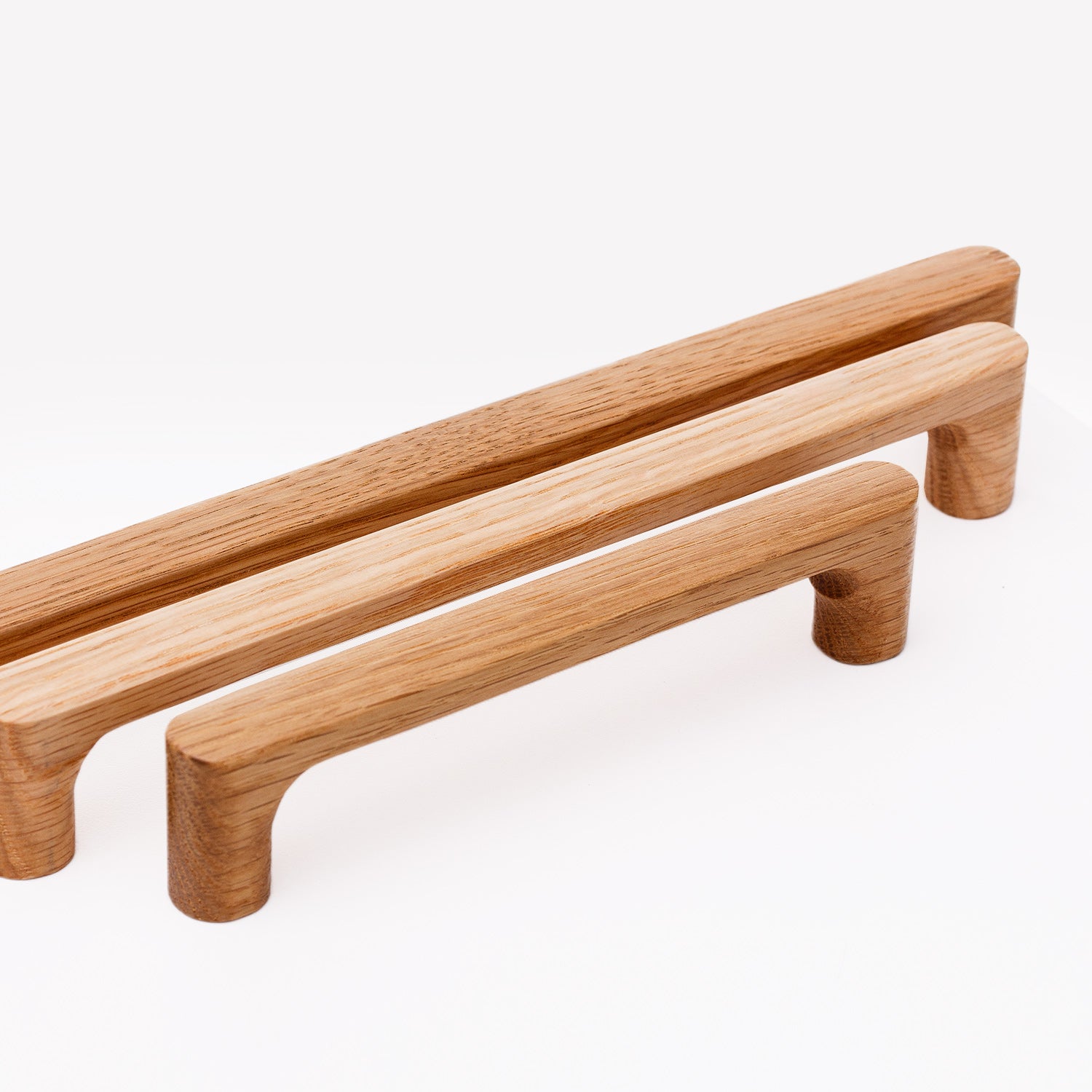
Finish guide
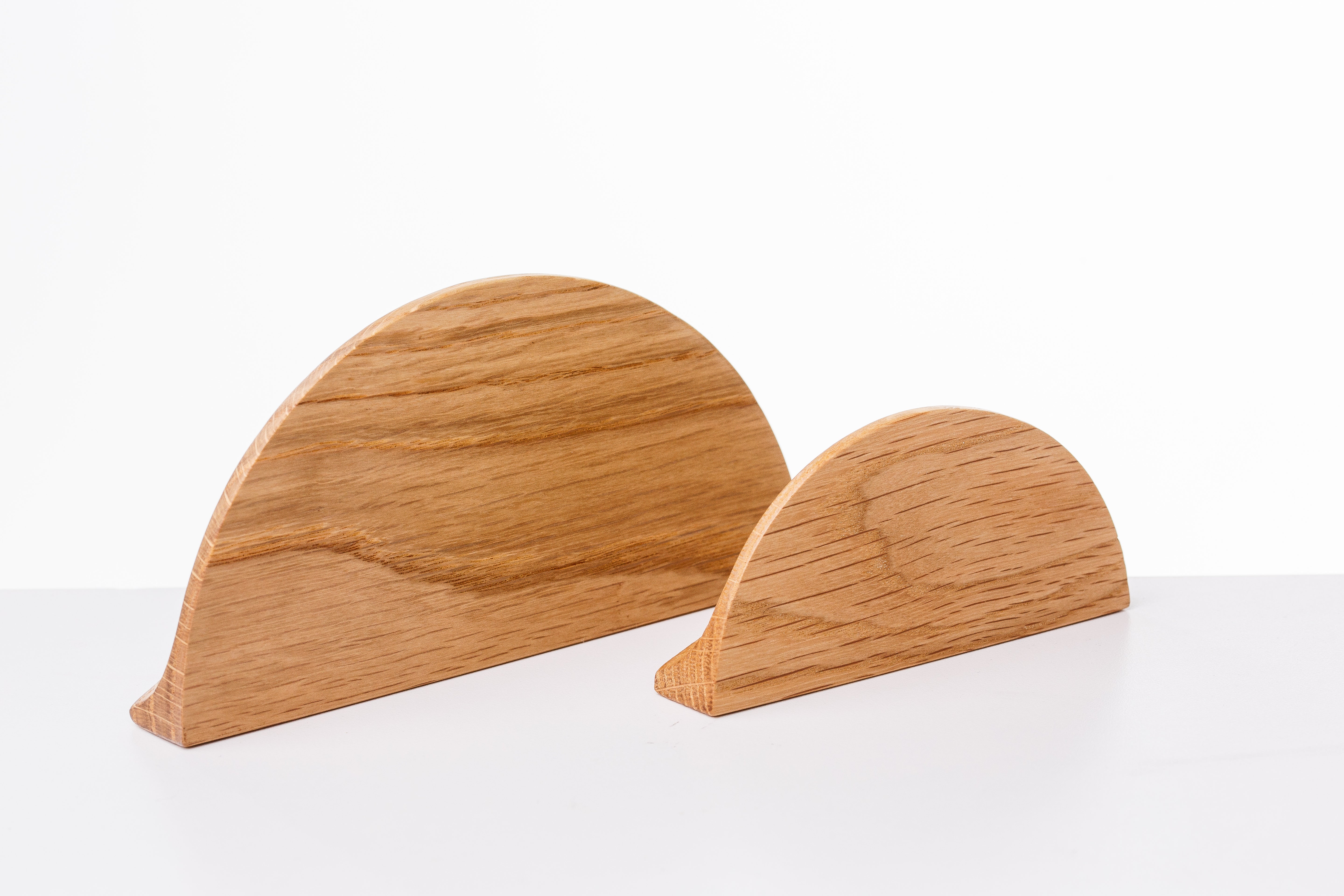
Oak
Light, open grained and warm. Oak is the finish that disappears into a scheme rather than announcing itself, which is usually what people want from hardware.
Choose oak when
- Your joinery is pale, white, or painted in a soft neutral
- The benchtop is light stone and you do not want the handles competing with it
- There is already timber in the room, in flooring or a table, and you want the hardware to agree with it
- You want warmth without the hardware becoming a feature
Think again if
Your cabinetry is already oak or a light timber laminate. Oak on oak rarely matches exactly, and a near miss reads worse than a deliberate contrast. Walnut or black is usually the better answer there.
How it ages
Oak darkens gently with handling, more noticeably on the pieces that get used every day. After a few years a well used drawer handle will be slightly deeper in tone than one on a cupboard that rarely opens. Most people like that. If you want uniformity, oak is not the finish for you.
See the oak range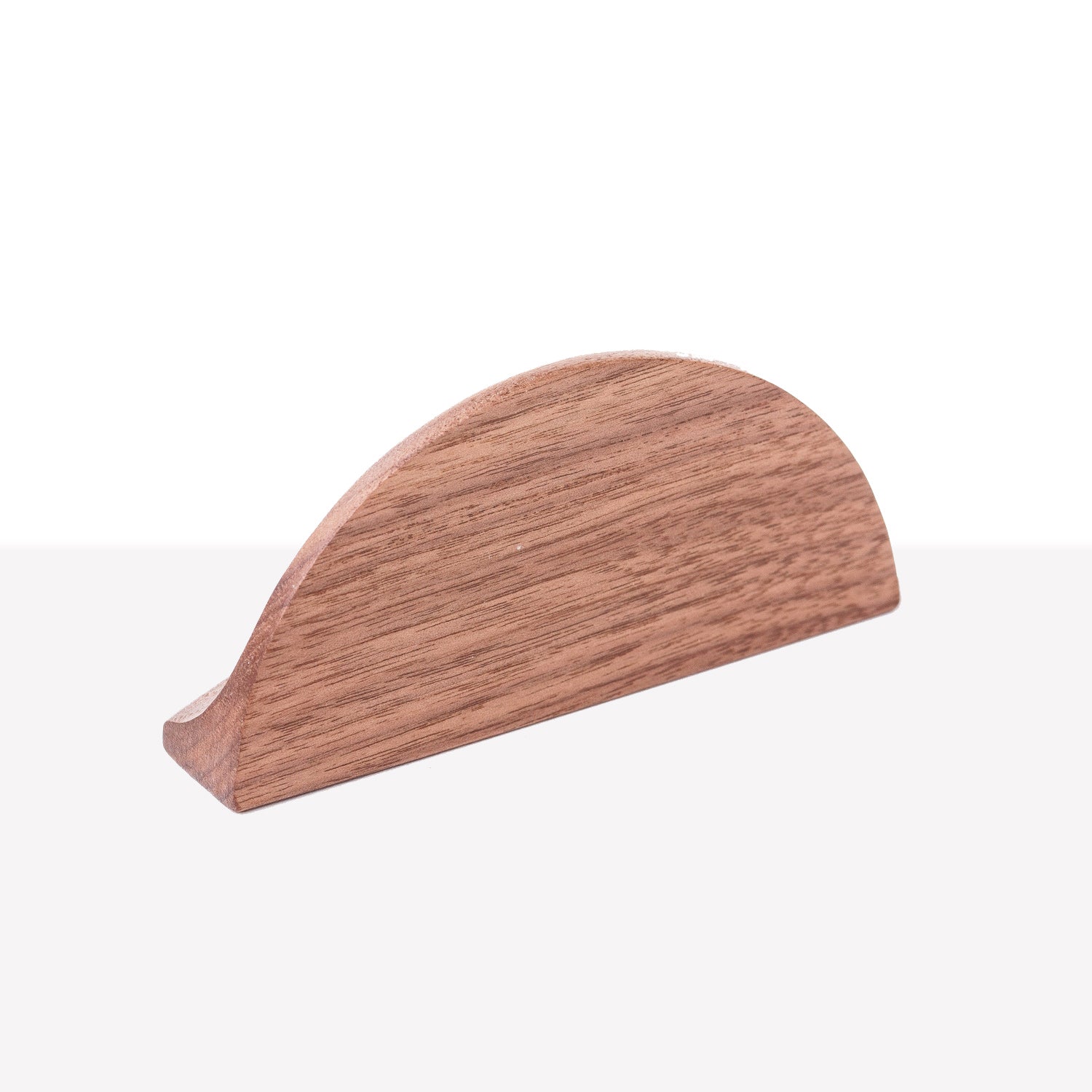
Finish guide
Walnut
Darker, closer grained, and with far more depth than oak. Walnut reads as a decision. On pale joinery it becomes a deliberate mark rather than a quiet one.
Choose walnut when
- You want the hardware to be visible as a detail, not just functional
- The joinery is pale and would otherwise feel flat
- There is brass tapware, dark stone, or stone with movement in it to hold its own against
- The room already has dark timber and you want the hardware to belong to it
Think again if
The kitchen is small and already busy. Walnut draws the eye to every handle, and on a wall of cabinetry that can read as spotty rather than considered. Oak is calmer in a tight space.
How it ages
Walnut deepens rather than darkens, and the colour variation between pieces is more pronounced than oak. Expect some handles to be noticeably richer than others out of the box. That is the timber, not a defect, and it settles as the whole set ages together.
See the walnut range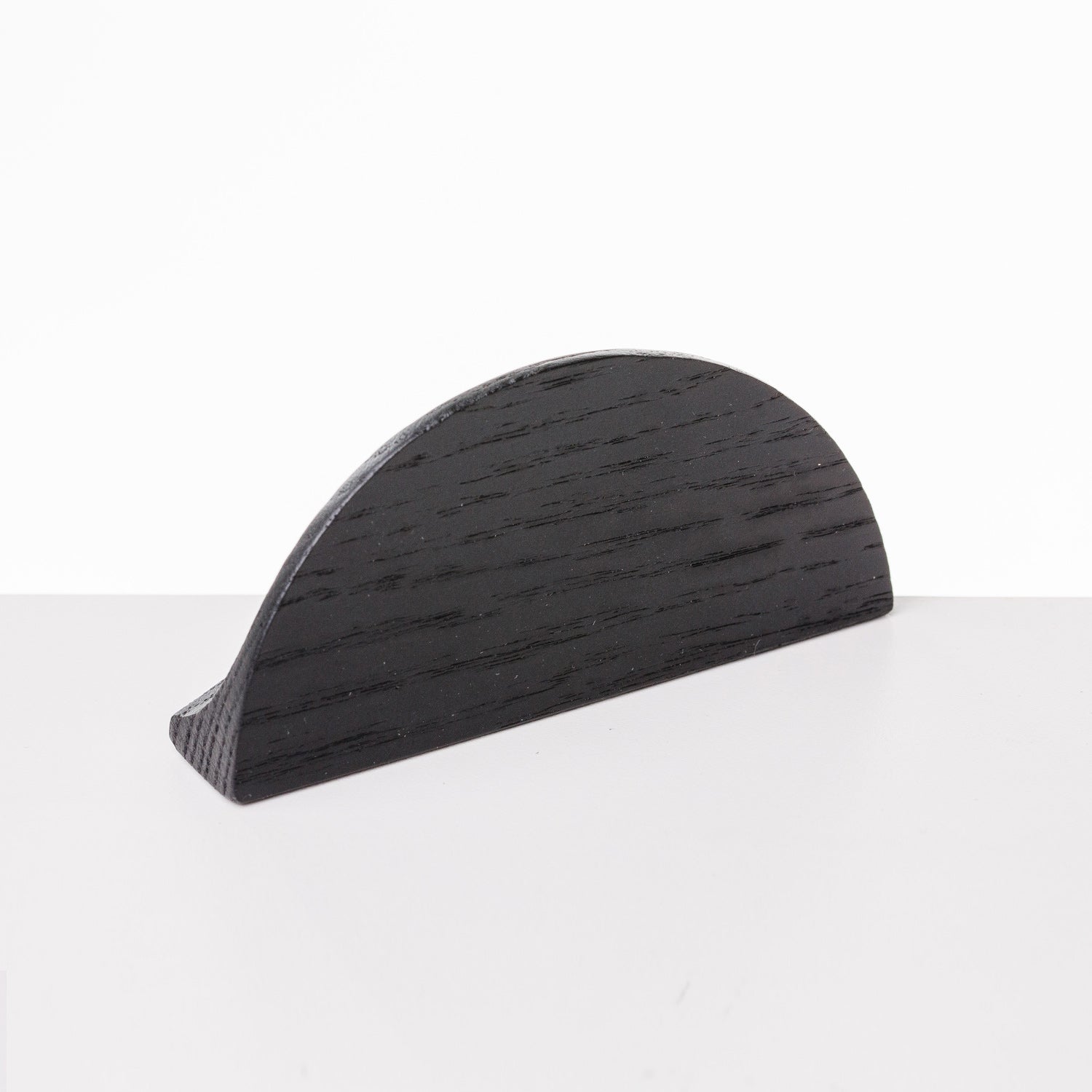
Finish guide
Black
Solid oak beneath a smooth black finish. It keeps the weight and feel of timber in the hand while reading as a clean line on the door, which is the reason to choose it over a metal handle in the same colour.
Choose black when
- You want the hardware to read as a line rather than a material
- The kitchen already has black tapware, black framed windows or dark fixtures to tie into
- Your joinery is pale and you want precise, graphic contrast
- Your joinery is dark and you want the hardware to almost disappear
Think again if
You chose timber hardware because you wanted visible grain. The grain is still there under the finish and you can feel it, but you will not see it the way you do in oak or walnut. If the timber look is the point, black is the wrong finish.
How it ages
The most stable of the three. It will not shift in colour the way the bare timbers do, so a black kitchen looks much the same in five years. The trade off is that it will not develop character either.
See the black rangeThe finish itself
All three are finished in hard wax, not lacquer.
Lacquer forms a film over the timber. It looks flawless on day one, and when it chips it cannot be repaired invisibly. It also flattens the texture, which is most of the reason for choosing timber at all.
Hard wax penetrates the grain instead of covering it. The surface keeps the texture it started with, marks can be worked out rather than lived with, and the timber ages rather than wears.
What it asks in return is modest. A dry or barely damp cloth. No solvents, no bleach, nothing abrasive, and do not leave water sitting on it. More on that in cleaning timber handles and what hard wax protection actually is.
One place to be careful: sustained moisture. These are not the right hardware for a wet area with standing water or for outdoor cabinetry. More on high moisture areas.
Still deciding
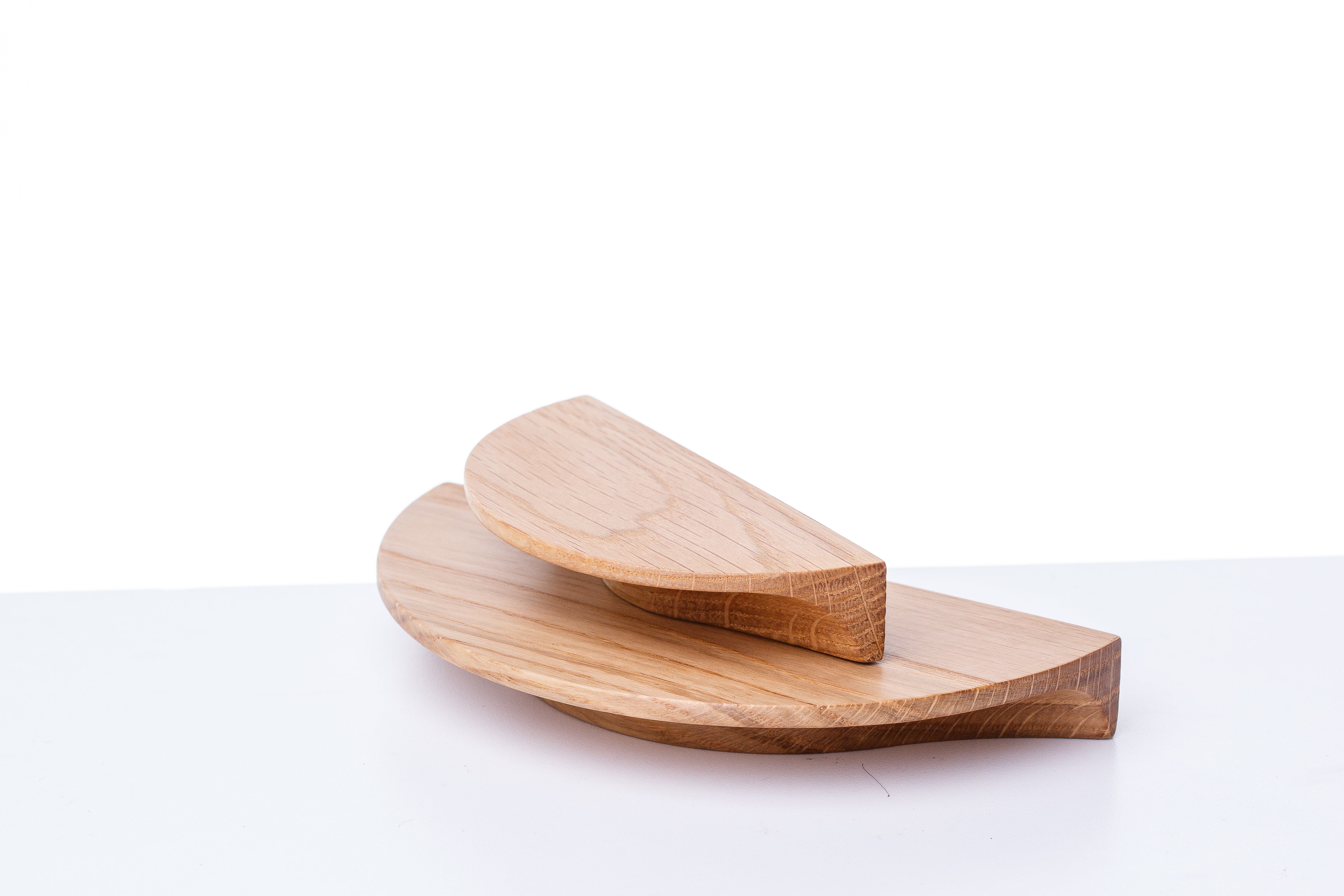
Look at it in the room
Timber changes with the light it is in. A walnut handle that looks near black on a screen can read warm brown against a north facing window, and oak that looks pale in a photograph can turn quite golden under warm downlights.
The sample roll holds fifteen pieces across every design and finish, in a canvas roll that travels. Put it on the actual door, in the actual room, at the time of day you use the space.
Be the first to know
New releases
Occasional email when we release something new. Nothing else.